
Rail Trail Auras


What is an Aura?
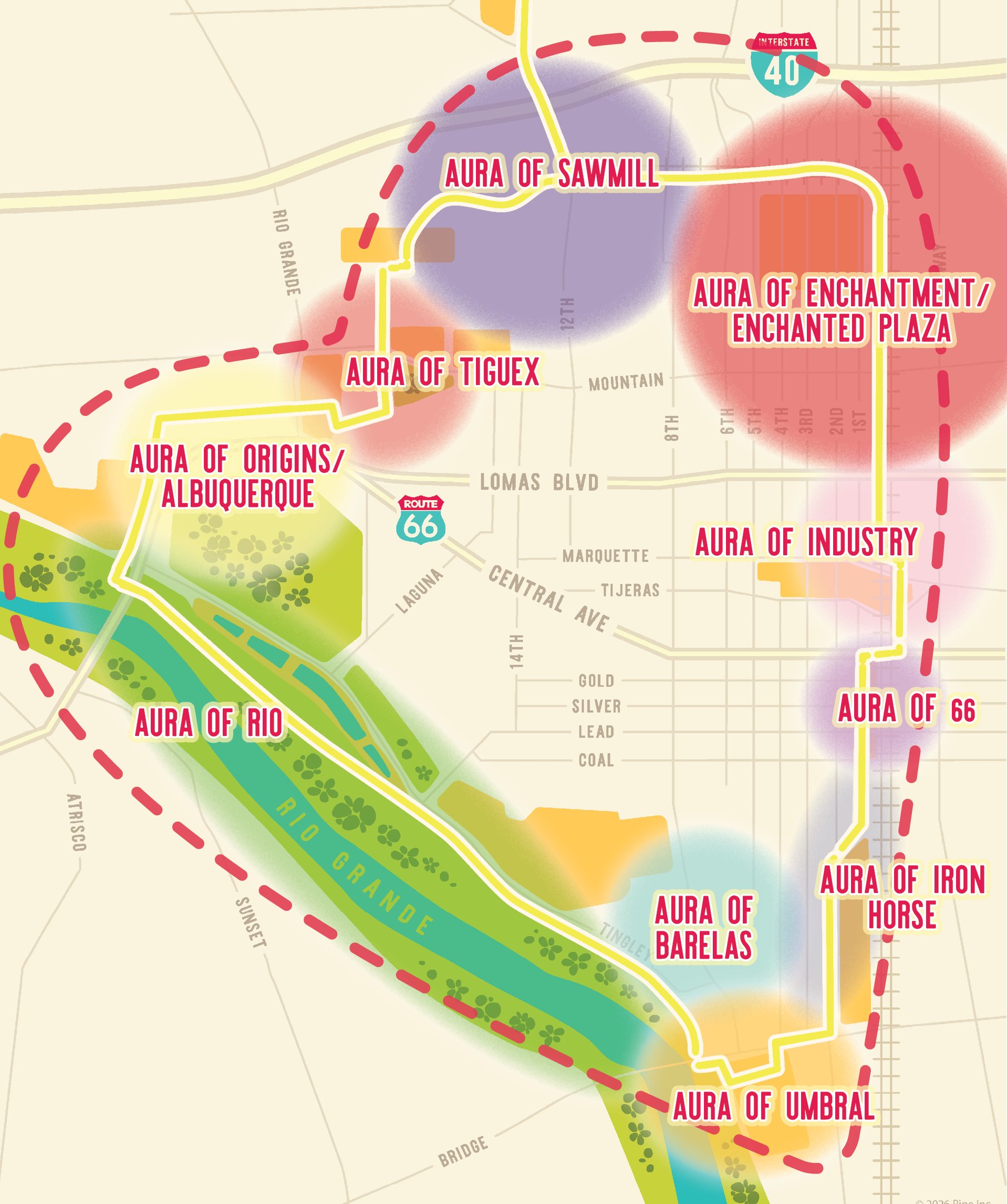
The Rail Trail is organized around a series of “Auras,” or storytelling themes inspired by the places the trail passes through. Each Aura reflects a different layer of Albuquerque’s history, culture, landscape, or identity. Together, they tell a larger story of Albuquerque as people move around the trail.
Within each Aura, “Hotspots” may use art, pavement designs, gathering spaces, and other features to bring these stories into the trail experience.

The Aura of…
66
Route 66 changed how people traveled through Albuquerque and how the city presented itself to the world. This Aura captures the energy of the Mother Road—from neon signs, motor courts, and roadside attractions to Downtown nightlife and generations of cruising Central Avenue. Located where Route 66 meets the railroad, it marks a crossroads of local history and American travel.
Industry
The railroad brought warehouses, manufacturers, and new businesses to the area north of Downtown. That spirit of enterprise continues today in local breweries, coffee shops, restaurants, creative businesses, and gathering places. The Aura of Industry connects Albuquerque’s working past with the people building and making things here today.
Enchantment
The Aura of Enchantment draws from the landscape that surrounds and sustains Albuquerque: the Sandia Mountains, the volcanoes and West Mesa, Tijeras Canyon, and the Rio Grande. It reflects the landforms, light, stories, and cultural traditions that give this place its unmistakable character.
Sawmill
The Sawmill area grew around lumber mills, warehouses, and the railroad spur that once served them. After decades of industrial activity, neighborhood residents helped guide its transition toward housing, local businesses, and community spaces. This Aura recognizes both the area’s working history and the strong community that shaped what came next.

Tiguex
Origins / Albuquerque
The middle Rio Grande Valley is the traditional homeland of Tiwa peoples, whose communities have cared for this land for generations. The Aura of Tiguex acknowledges this deep history, including the lasting presence of Sandia and Isleta Pueblos, while remembering the violence and disruption brought by Spanish colonization.
Centered around Old Town, this Aura explores Albuquerque’s development from a Spanish colonial villa into a regional center for trade, worship, government, and community life. It also reflects Old Town’s continued importance as a gathering place and the enduring Hispanic traditions that remain part of Albuquerque’s identity.
Rio
The Rio Grande has shaped Albuquerque’s land, communities, and daily life for centuries. It supported farms and acequias, created the bosque, replenished the aquifer, and influenced where people settled. The Aura of Rio invites people to experience the river as both a living ecosystem and one of the city’s defining landmarks.
Barelas
Barelas grew from a farming village along El Camino Real into a close-knit railroad neighborhood and major bilingual commercial district. Although railroad job losses and urban renewal brought painful changes, the neighborhood’s families, traditions, and community ties endured. This Aura honors the history, resilience, and distinct identity of Barelas.
Umbral
“Umbral” means “threshold” in Spanish—a doorway, entry point, or passage between worlds. Near the National Hispanic Cultural Center and the historic Rio Grande crossing, this Aura explores cultural exchange, migration, language, and the blending of Indigenous and Hispanic traditions. It serves as a gateway to the many identities and stories that shape Albuquerque.
Iron Horse
The arrival of the railroad transformed Albuquerque, bringing new jobs, residents, goods, and connections to the rest of the country. The Aura of Iron Horse recalls the people who worked in the locomotive shops, the travelers welcomed at the Alvarado Hotel, and the Rail Yards structures that remain an unmistakable part of Albuquerque’s skyline.